Writer: Barney Norris
Director: Josephine Burton
Music: Jonathan Walton
Reviewer: Christine Stanton
“Lacking Passion & Energy“
2 / 5
When a local community collectively spoiled their ballot papers at a recent election, the politicians assumed that the locals were uninterested in politics, but far from it. They want people that listen to, fight for and work alongside them, their community and the issues that actually affect them.
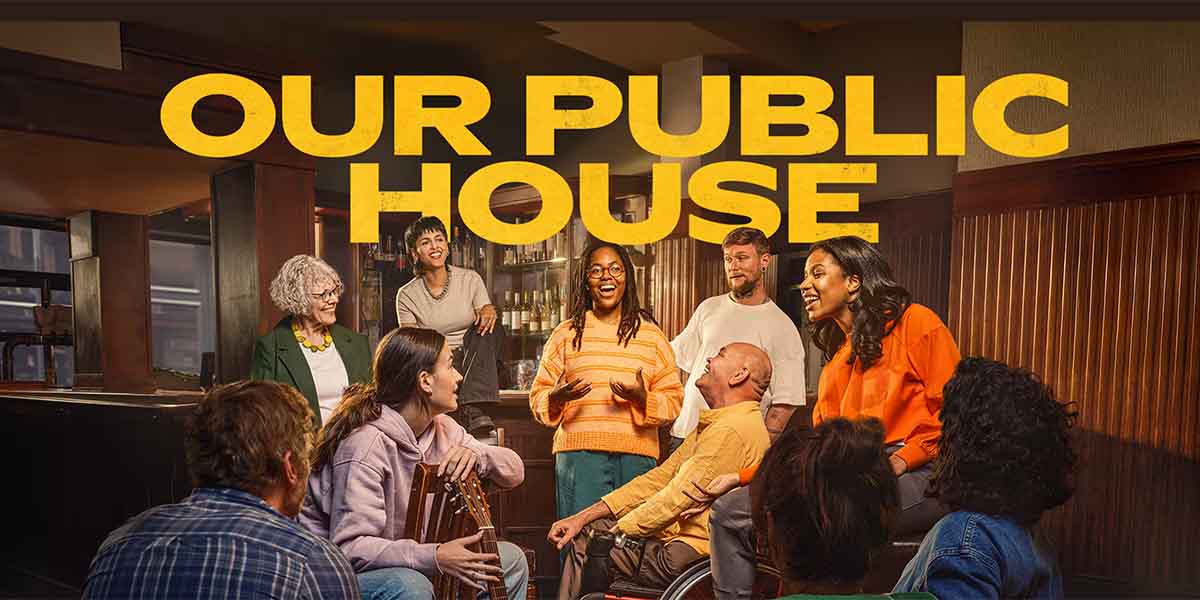
Mary (Gabriella Leon) is a Labour candidate, not local mind, but still keen to make a change in the community and do politics differently to what the residents are used to. Her colleague Tom (Kit Esuruos) is less keen, preferring to take the tried and tested approach, with rigidly written speeches and stoic displays of professionalism. Prior to partaking in a hustings, they pop into one of the local pubs, owned by widower Sanj (Bharti Patel) who just so happens to run a speech writing class every week, to aide in giving her regulars more of a voice. Jo (Lauren Moakes) has recently left prison and is keen to get custody of her daughter back, musician Scott (Fergus O’Donnell) is considering running for Reform, and Sanj’s daughter Anika (Chaya Gupta) is back for half term, but already miserable about the lack of opportunity and change in her hometown. Can Mary and Tom spark some form of connection with the locals or is the town destined to remain known as being a spoilt ballot society?
The idea of Barney Norris’ community lead storyline, is strong and has the opportunity to be incredible, though, in this iteration, it unfortunately falls extremely flat. The concept of a voiceless group of individuals is relatable – with many areas feeling ignored and brushed off by those in power, so it should, if executed well, be an extremely rousing and powerful piece of theatre. However, as it stands, it’s slow and surprisingly, considering the show themes, completely devoid of energy and passion. Much of this is attributed to the meandering conversations, that do little to progress the plot forward. It is extremely naturalistic, but to a fault; the excessive time spent on everyday conversations, dwelling on laboriously mundane detail and tedious interactions tires fast.
The characters feel, in comparison, not explored or expanded on enough. Each of them has their ‘defining character story’, Jo’s past, Sanj’s central role in the community and Anika’s departure from her old town – but it’s all very one-dimensional, and it’s hard to connect with any of the characters on a deeper level than what they were designed to represent. Scott is another great example of this – initially, he seems like the likeable local, but quickly launches into an aggressive, offensive tirade into Tom and Mary for not spending time with locals, and then later in the show, announces he is considering running as a reform candidate. It almost feels as though he was quickly changed from what he originally appeared to be, to shoehorn in someone with more right-wing views and character traits than the other locals.
Jonathan Walton’s music is unique – in that although he has composed the musical arrangements, the ‘lyrics’ themselves are original words taken directly from people Dash Arts worked with during its research project, two of which also take the stage in each performance with their own crafted speeches. It’s a detail that should be advertised more, because unless you were already aware, it’s not clear that the lyrics have been crafted in that way, and you wouldn’t be wrong in being confused by the strange musical interludes. Having that additional context, allows you to listen to the ‘lyrics’ themselves, with a more sympathetic ear, as opposed to solely wincing at the strangely crafted, slow tempo songs about bins or getting rid of old White men.
One of the main positives from the show is that Good Teeth Design’s set is fantastic, The Albion pub is immediately homely, recognisable and inviting. Subtitles are cleverly integrated into the pub’s menu board, alongside occasional sign language, which is an enjoyable, accessible addition that is also woven into the narrative as part of Mary’s struggles as a deaf politician. It is encouraging to come across a production where individuals and community is put at the forefront, and the message of them being finally recognised by those with influence and power, as well as the push for unity and collaboration, is a strong one. There is a gem of an idea in this production, it just needs a lot of work to really drill down to it and allow it to shine.
Runs until 4th July 2026


Leave a comment